E-Drive Delivers: Real Data, Real Results, Real Performance
This is the third and final article in our E-Drive Performance Series. Following Parts 1 and 2, which examined power generation efficiency and electric drive range and performance, we now explore one of the most exciting capabilities of the system: intelligent hybrid motoring.
In Part 1 we showed how E-Drive dramatically outperforms traditional generators. On sea trials with Balance 502 and 526 catamarans, E-Drive achieved generation efficiencies of 4.1–4.7 kWh per litre of diesel, compared to 2.8 kWh/litre for a conventional genset — a 46% to 68% efficiency improvement. Charging a 48 kWh battery bank from 20% to 80% takes roughly one hour when generating 26 kW, with fuel consumption reduced by 32–40% for a full charge depending on the boat model.
In Part 2 we explored E-Drive as an electric propulsion system. On Balance 482 and 502 catamarans equipped with dual 30 kW E-Drives and a 36 kWh battery bank (80% usable capacity), the electric-only range reaches 27–28 nm at 3 knots, with range and performance naturally decreasing at higher speeds. While not designed for long-distance electric cruising, E-Drive shines in low-speed, high-control scenarios — such as marina manoeuvring, light-wind sailing assistance, and precision docking – delivering quiet, precise, and efficient propulsion exactly when boaters need it most.
Hybrid Motoring: Unlocking the Full Potential of E-Drive
On a catamaran, hybrid motoring means driving one hull with a diesel engine while the other hull is driven by an E-Drive electric motor. This configuration transforms how power is generated, stored, and deployed across the vessel, revealing the true capability of a fully integrated hybrid propulsion system.
The result? A system that can simultaneously deliver:
- High-efficiency speed gains
- Measurable fuel savings
- Extended battery range
- Significantly reduced engine running hours
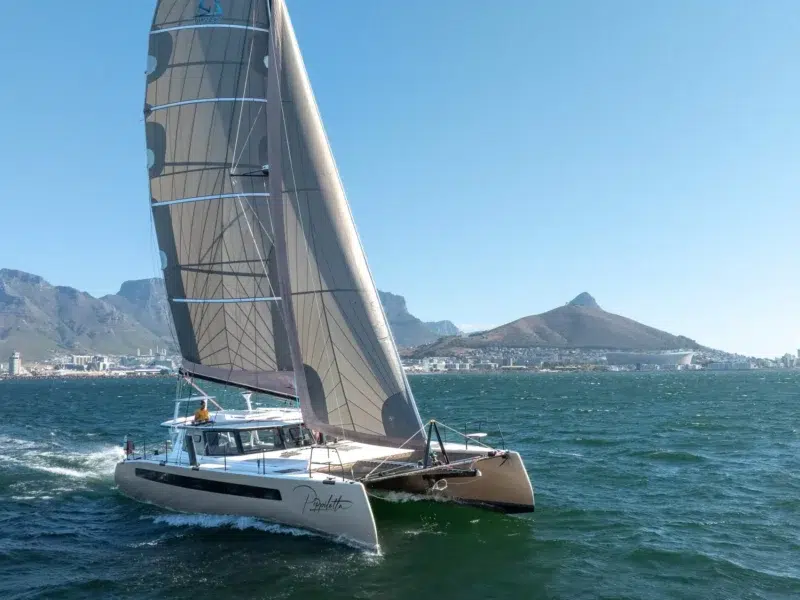
The data below comes from sea trials on a Balance 502 “Tiger Lily”, fitted with a dual E-Drive system and two Yanmar 45hp engines. Two operating modes were tested:
- Both hulls driven by diesel engines (E-Drives off)
- Port hull driven by a diesel engine (E-Drive generating power) + Starboard hull driven by an E-Drive electric motor (diesel engine off)
Understanding Hybrid Behaviour: Fuel Consumption
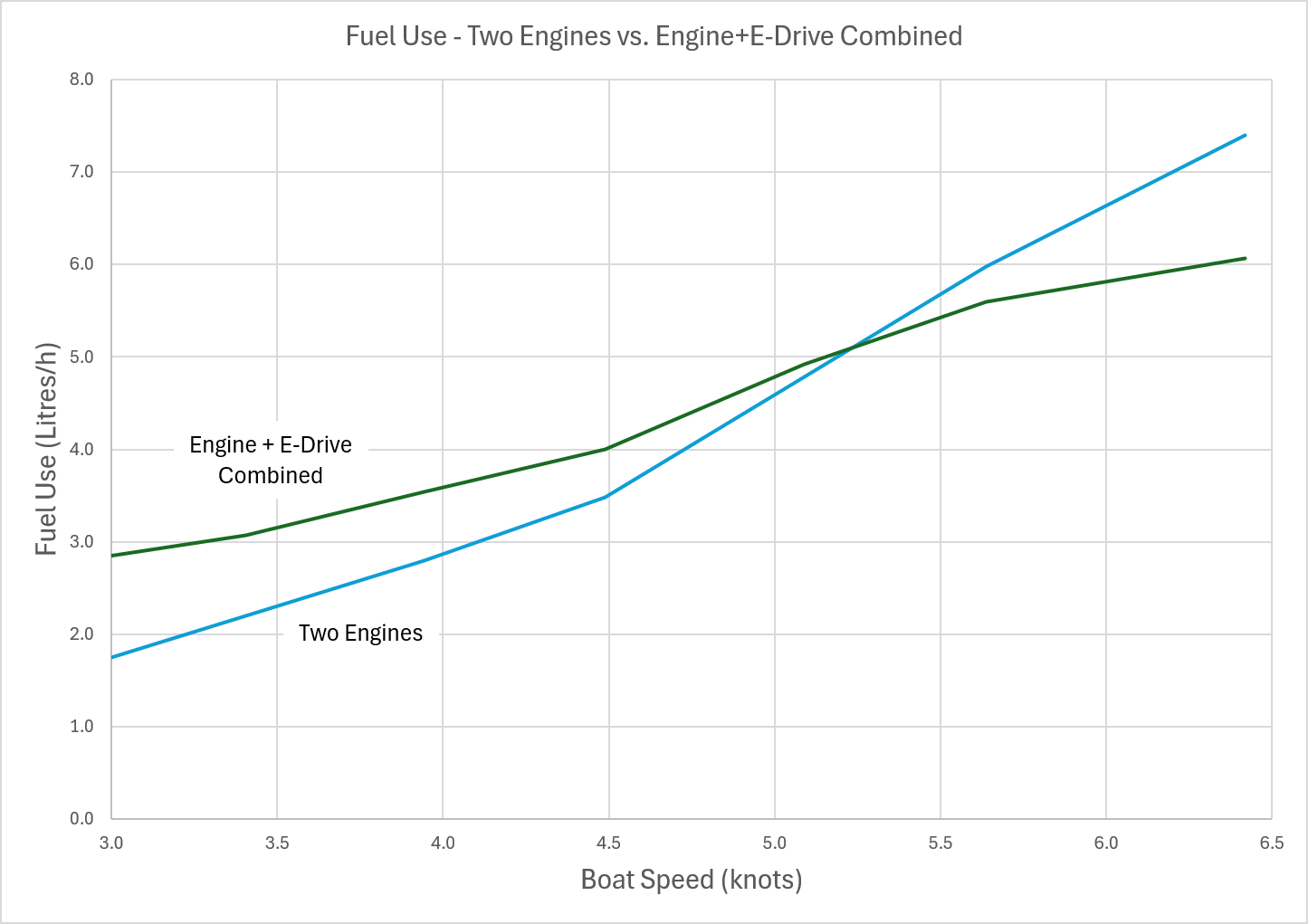
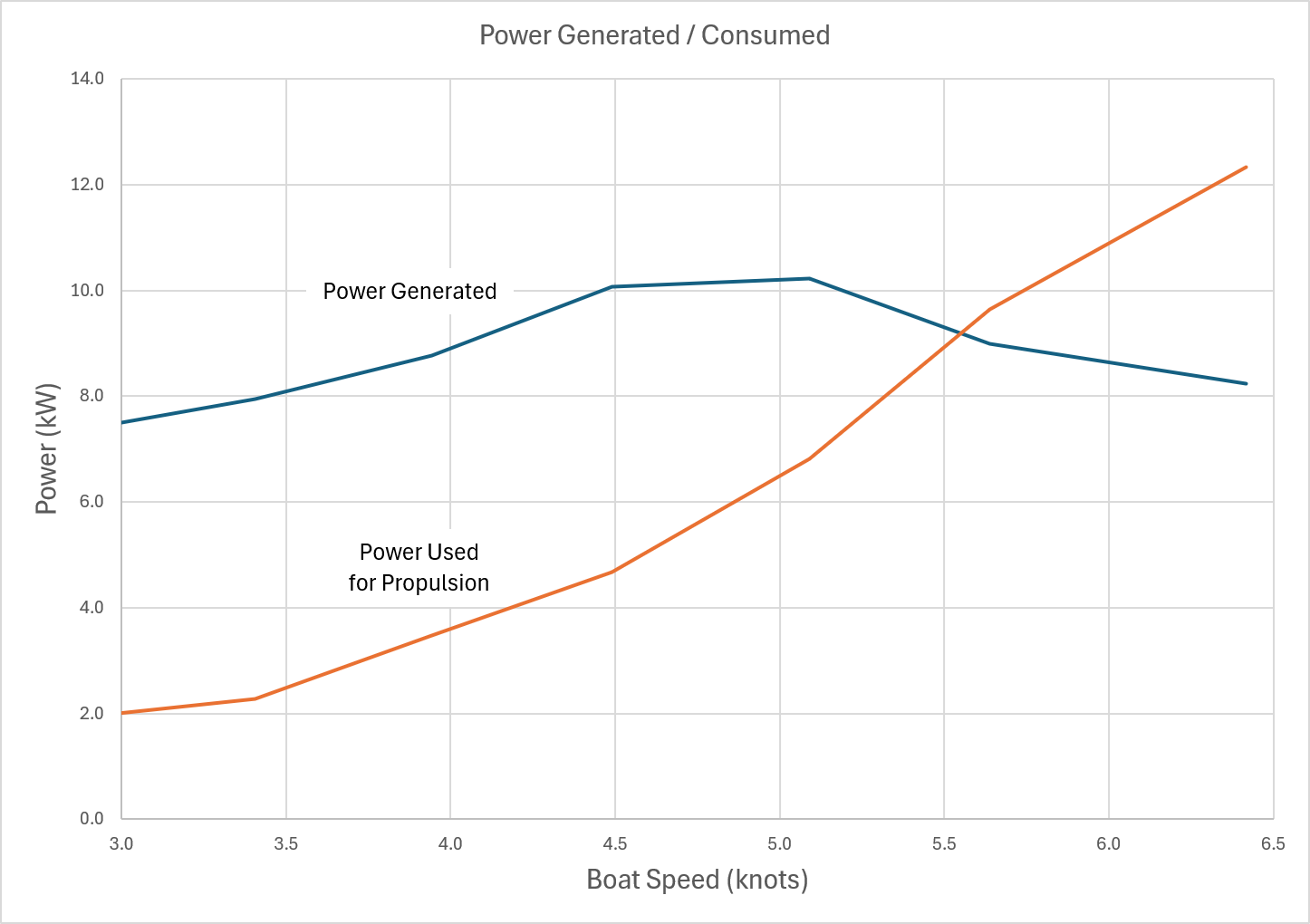
As depicted in the following graph, at lower speeds the combined Engine + E-Drive system uses a small amount of extra fuel because it is generating electrical power while providing propulsion. At higher speeds, the E-Drive electric motor on the starboard hull draws incremental power from the 48V batteries, avoiding the fuel burn of a second diesel engine.
Understanding Hybrid Behaviour: Power Flow
At low speeds most generated power is stored in the batteries. Above approximately 5.5 knots, all power generated by the engine-driven E-Drive system on the port hull – plus additional power from the battery – is used for propulsion by the E-Drive electric motor on the starboard hull. The following graph depicts this scenario.
Fuel vs. Power – The Complete Picture
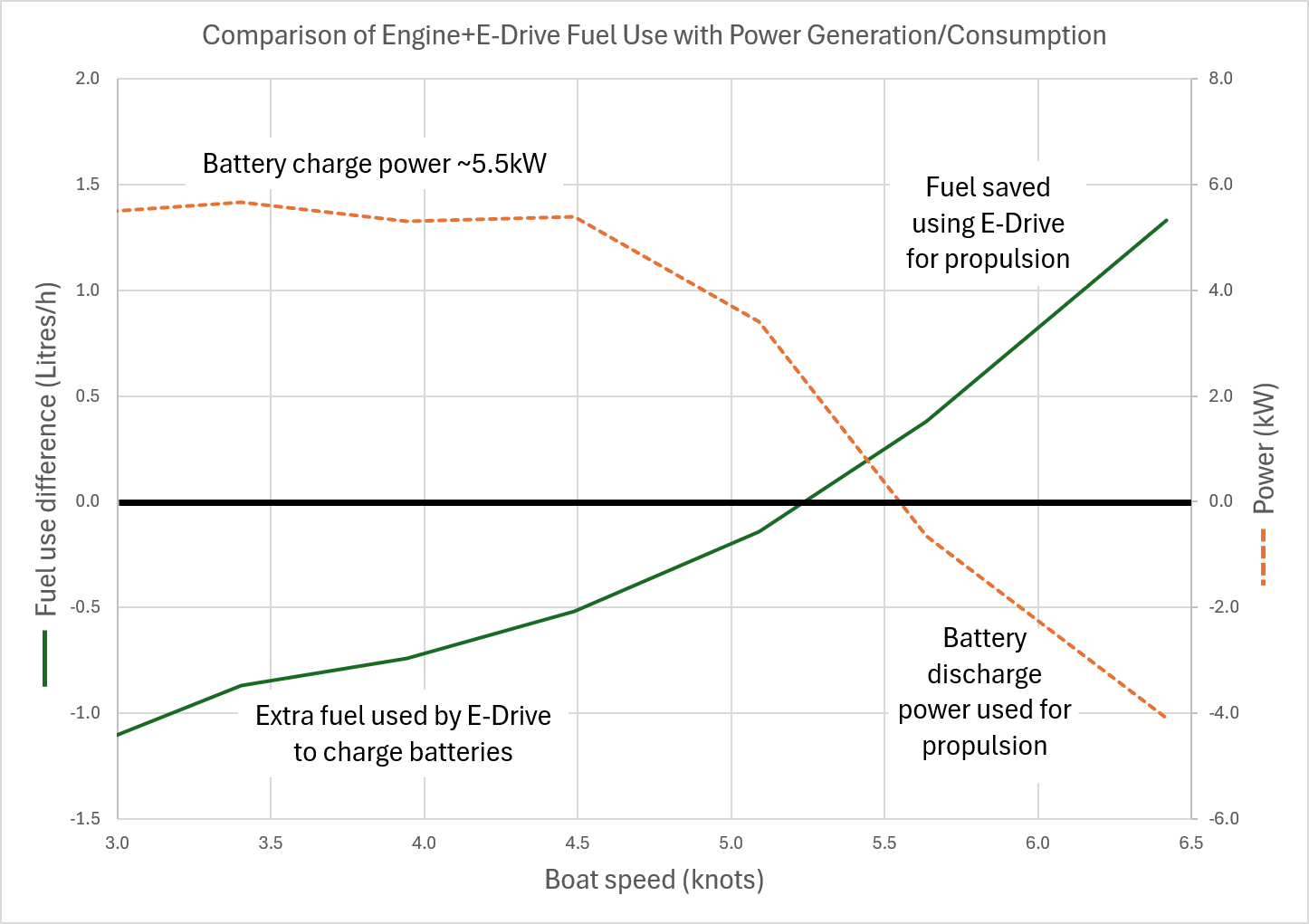
When these two views are combined, the real advantage becomes clear. The graph below shows the difference in fuel use between twin-engine operation and the hybrid configuration, together with net power generated or consumed by the hybrid system with increasing boat speed.
Key Findings
1. Highly Efficient Power Generation at Low Speeds
- At 3 knot the combined hybrid system generates around 5.5 kW using just over 1 L/h of additional fuel (compared to twin engine operation) – a power generation efficiency of 5.5 kWh per litre.
- At 4.5 knots the same 5.5kW is generated with only 0.5 L/h extra fuel used.
- When run for one hour at this speed, the effective generation efficiency reaches 11 kWh per litre – that’s nearly four times (or 400%) more efficient than a standalone diesel generator!
2. Same Fuel Use with Engine Hours Halved
Just above 5 knots, the hybrid system burns diesel at roughly the same rate as two engines – but only one diesel engine is running. This delivers:
- Halved engine hours
- Reduced engine maintenance requirements
- Longer lifespan since the engine runs more efficiently
- A bonus of around 2 kW of useable energy
3. Net Fuel Savings at Higher Speeds
Above 5.5 knots the hybrid configuration delivers genuine fuel savings. At 6 knots, for example, only 2 kW of additional propulsion power is drawn from the batteries – power that may be replenished by onboard solar on a sunny day.
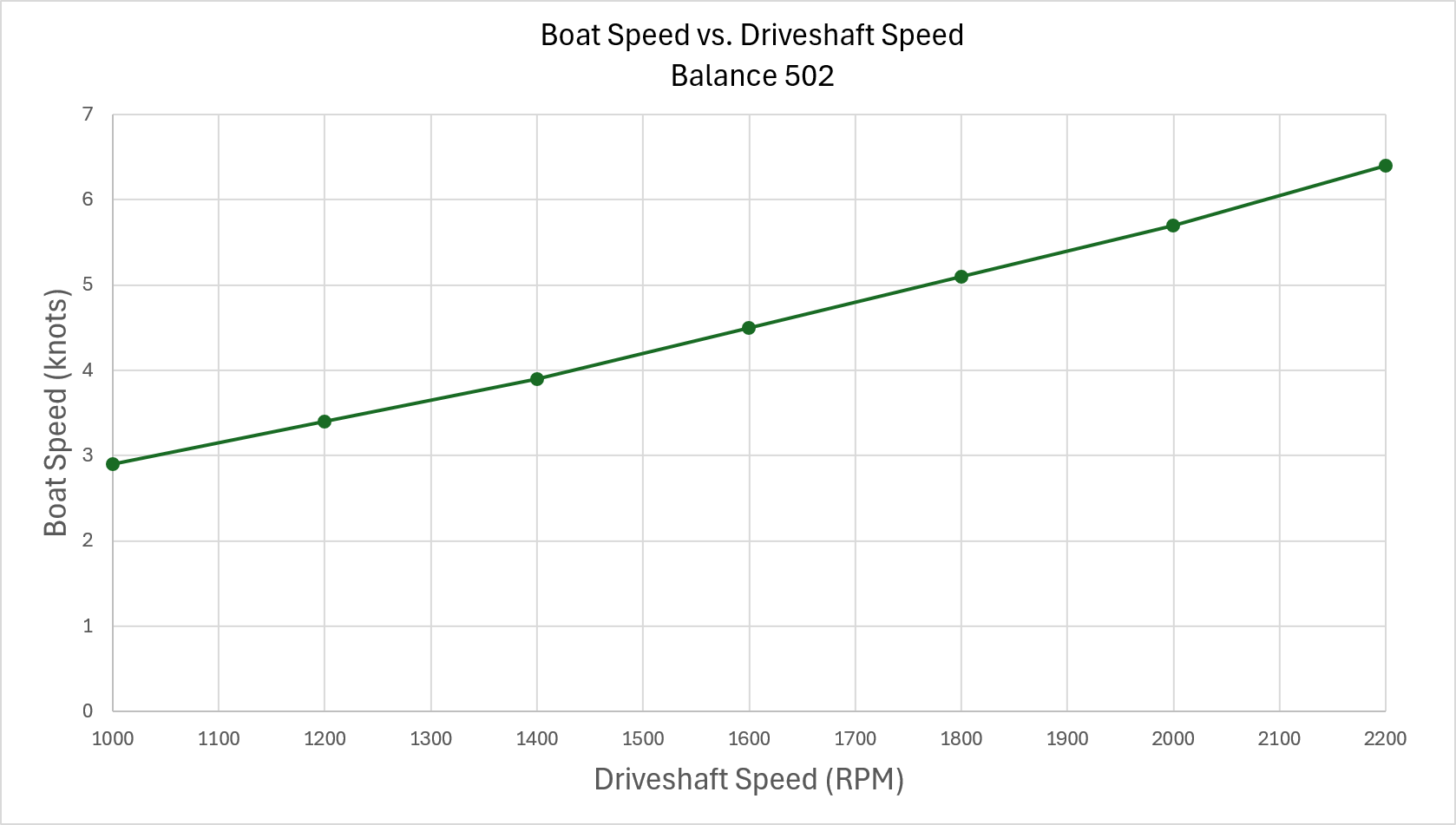
An additional reference plot comparing boat speed and drive shaft speed on the Balance 502 is included below for context.
What This Means in Practice
These results highlight a fundamental shift: propulsion and power generation are no longer separate systems. Energy is dynamically allocated based on real-time demand, maximising efficiency across the full operating profile of the vessel.
Instead of choosing between motoring or charging, E-Drive lets owners do both – more efficiently, more quietly, and with lower overall fuel consumption.
Wrapping Up
Across the three-part E-Drive Performance Series we have demonstrated how Integrel E-Drive delivers:
- Significantly higher generation efficiency than traditional systems
- Practical, usable electric propulsion for everyday boating needs
- A highly flexible hybrid solution that optimises performance, fuel use, and comfort across all speeds and conditions
Importantly, this is not a static technology. Integrel continues to collect real-world data, refine integration, and improve power output and efficiency on different vessel types.
The numbers are impressive, but the real story is the change in how owners can use their boats: quieter, cleaner, more efficient passages with fewer engine hours and lower running costs.
The New Standard in Marine Hybrid Propulsion
Real data from real boats continues to prove what the Integrel team has always believed: E-Drive is a leap forward in integrated hybrid marine technology. We can’t wait to share the next set of results as more boats take the system further afield.
Stay with us as we continue to push the boundaries of intelligent onboard energy management and hybrid boating.
Ready to choose Integrel?
Get in touch today and our friendly, experienced team can help you start living a more luxury and environmentally friendly life out on the water…